Author

Christoph NEDOPIL WANG

Browsing

Dr. Christoph NEDOPIL WANG is the Founding Director of the Green Finance & Development Center and a Visiting Professor at the Fanhai International School of Finance (FISF) at Fudan University in Shanghai, China. He is also the Director of the Griffith Asia Institute and a Professor at Griffith University.


Christoph is a member of the Belt and Road Initiative Green Coalition (BRIGC) of the Chinese Ministry of Ecology and Environment. He has contributed to policies and provided research/consulting amongst others for the China Council for International Cooperation on Environment and Development (CCICED), the Ministry of Commerce, various private and multilateral finance institutions (e.g. ADB, IFC, as well as multilateral institutions (e.g. UNDP, UNESCAP) and international governments.


Christoph holds a master of engineering from the Technical University Berlin, a master of public administration from Harvard Kennedy School, as well as a PhD in Economics. He has extensive experience in finance, sustainability, innovation, and infrastructure, having worked for the International Finance Corporation (IFC) for almost 10 years and being a Director for the Sino-German Sustainable Transport Project with the German Cooperation Agency GIZ in Beijing.


He has authored books, articles and reports, including UNDP's SDG Finance Taxonomy, IFC's “Navigating through Crises” and “Corporate Governance - Handbook for Board Directors”, and multiple academic papers on capital flows, sustainability and international development.

This article is the first of a series of posts on green finance trends in China. The work was prepared with support from the International Institute for Sustainable Development (IISD) as a scoping study for the China Council for International Cooperation on Environment and Development (CCICED). The report does not…

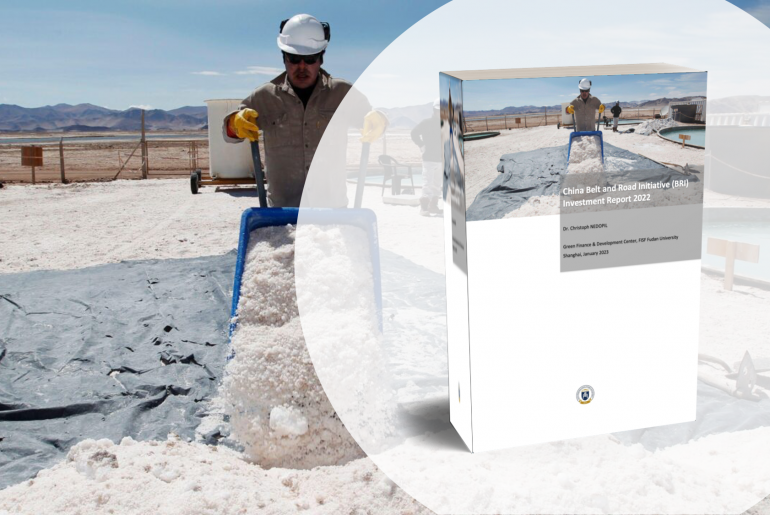
Download full report As the world’s largest bilateral creditor nation, China may be considering strategies and plans for debt reorganization for some of its most important, and most debt stressed, BRI country partners. The world is experiencing the worst sovereign debt crisis in a generation, and China is in a…

The 2022 United Nations Climate Change Conference (COP27) held in Egypt in November was important for spotlighting climate finance in emerging markets. Particularly the Loss and Damage fund, which aims to provide compensation for emerging economies’ losses impacted by climate change, received global attention. A less talked about but highly…

Download here A foundational pillar of addressing climate change that was unthinkable only three years ago is now becoming reality: the early retirement of coal-fired power plants in emerging economies. During the G20, Indonesia launched its Just Energy Transition Partnership (JETP) – a breakthrough climate finance partnership designed to mobilize…

Download report On November 16, 2022, the G20 meeting in Bali, Indonesia under Indonesia’s presidency concluded. The report on Innovative finance towards a low-carbon and climate-resilient future written by Christoph Nedopil and supported by UNDP, UNICEF, GGGI and NDC Partnership for the G20 Climate and Sustainability Working Group (CSWG) was…

This article was originally published in The World Financial Review. The green transition of energy, transport, industry, urbanisation and agriculture requires a massive acceleration of global green investments across the world to meet the Paris agreement and reverse the loss of biodiversity. Yet so far, green finance lacks harmonised definitions…