Another turbulent and complex year is coming to end driven by economic recovery (discussions), more COVID19 and more Zoom conferences. Before we round up and share what we believe were key developments in green finance and sustainable development in 2021, we want to take this opportunity and first say: Thank you for…
The emissions trading system (ETSs) is currently one of the market-oriented tools adopted globally to control greenhouse gas emissions. On the basis of the construction of the regional ETS, harmonization is an important direction for future development in order to make the system more effective. Against the backdrop of the…
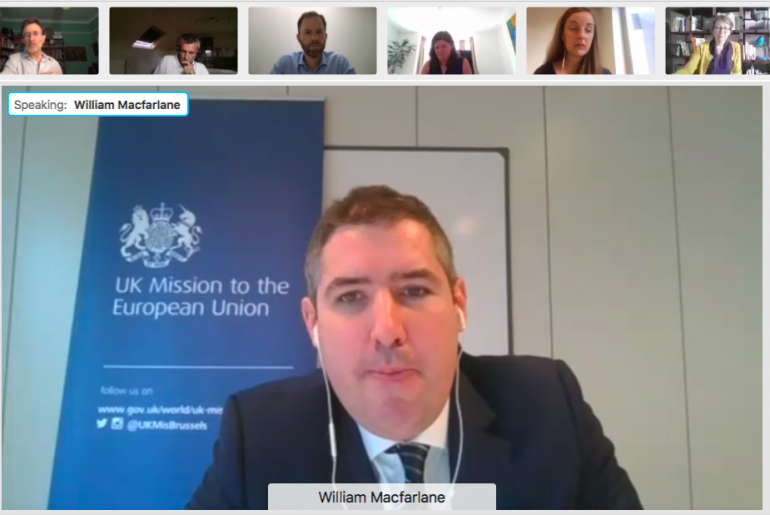
On June 8, UK Mission to the European Union hosted a panel discussion on mobilizing finance and resources to protect biodiversity in preparation for the upcoming Convention of Biological Diversity (CBD COP15). The panel included: William Macfarlane, Director of Economics and Finance, UKMis BrusselsLaura-Louise O’Reilly, Head of Environment, UKMis BrusselsDr.…
On March 5 during the “Two Sessions”, China introduced its 14th five-year plan for 2021 to 2025, as well as the Government Work Plan. In it, China vows to focus on “green development”, to uphold the “30-60” promise of Xi Jinping for China to try to peak carbon emissions before…
On February 22, 2021, China’s State Council issued the “Guiding Opinions on Accelerating the Establishment and Improvement of a Green and Low-Carbon Circular Development Economic System”. Published by the highest Chinese governing body only few weeks before the start of the “Two Sessions”- the annual plenary sessions of the national…
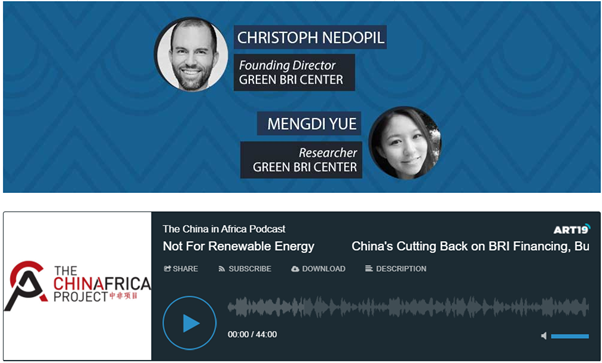
We invite you to listen to the new China in Africa Podcast, which invited IIGF Green BRI Center Director Christoph Nedopil and Researcher Mengdi Yue to discuss how the Belt and Road Initiative might become even greener in the coming years. The podcast was titled “China’s Cutting Back on BRI…
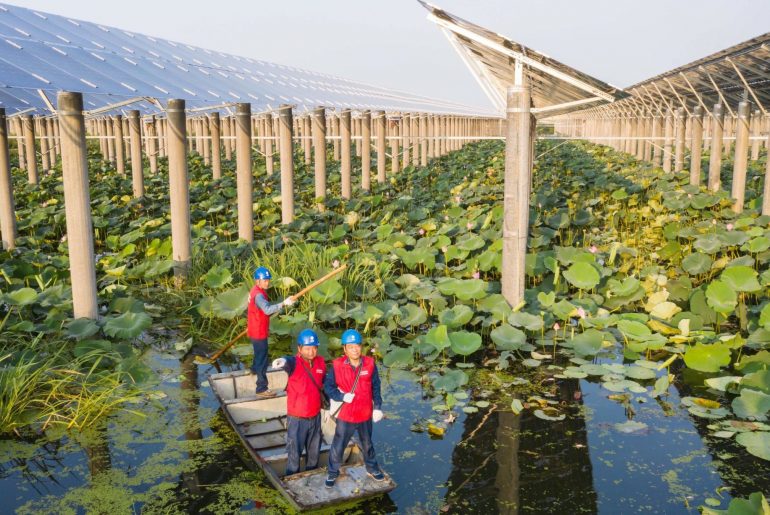
Highlights Renewable energy investments (solar, wind, hydro) constitute majority of Chinese overseas energy investments – increasing their share from 38% in 2019 to 57% in 2020 – amid a total decrease of BRI investments of 54% Key findings Chinese overseas investments into countries of the BRI were about US$47 billion…
On September 22, 2020, Chinese President Xi Jinping announced that China aims to peak CO2 emissions before 2030 and achieve carbon neutrality before 2060 during the UN General Assembly. EU-China-summit-2020 (Pic: European Council) One important partner for China to reach its ambitions is the European Union (EU). On September 14,…
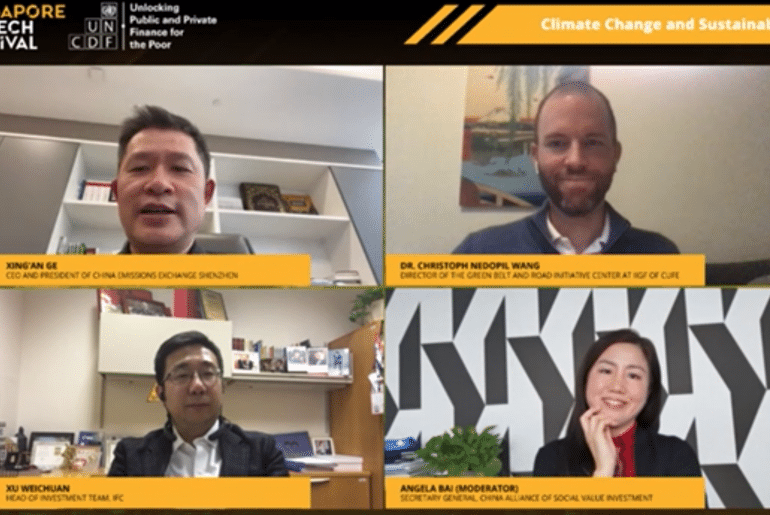
From 7 to 11 December, the UN Capital Development Fund (UNCDF) in partnership with the Singapore Fintech Festival (SFF) organized a series of events across multiple countries called the “Building Inclusive and Resilient Economies in the Digital Era”. Dr. Christoph NEDOPIL WANG, Director of the Green Belt and Road Initiative…
This article was originally published on China Dialogue under a Creative Commons licence. It will be a gargantuan task for China to make good on its recent pledge to become carbon neutral by 2060. Currently, it contributes about 26% of global carbon emissions, its economy is still rapidly developing, and many of its sectors and…